
Temple of Golden Ether
A Contemplative House for Dharma, Healing, and Deep Listening
Temple of Golden Ether
A Contemplative House for Dharma, Healing, and Deep Listening
The Temple of Golden Ether is the main contemplative space… our root.
While the Dharma Care Institute focuses on supporting human flourishing within care systems, organizations, and communities, the Temple of Golden Ether is devoted to the inner dimensions of human experience: meaning, healing, spiritual development, discernment, and conscious participation in life.
Rooted in yoga, contemplative practice, Jyotiṣa (Vedic/Sidereal astrology), nervous system awareness, and dharmic inquiry, the Temple serves as a space for reflection, guidance, and integration.
This is not a place of dogma, prediction, or spiritual performance.
It is a place of listening.
A place to pause amidst the noise of modern life and reconnect with the deeper currents moving through one's experience.
Whether you are navigating a life transition, seeking clarity around purpose, exploring spiritual questions, integrating a profound experience, or simply longing for a more grounded relationship with yourself, the Temple offers supportive spaces for inquiry and growth.


Oracular Dharma
The Living Philosophy of the Temple of Golden Ether
What is Oracular Dharma?
Oracular Dharma is the practice of listening deeply to life.
It is rooted in the understanding that human beings exist within a living and participatory cosmos—one in which meaning, relationship, intuition, embodiment, symbol, and mystery are not separate from reality, but expressions of it.
Within the Temple of Golden Ether, Oracular Dharma refers not to fortune telling or certainty about the future, but to the cultivation of discernment.
It is the art of listening for what life is asking of us.
It is the practice of becoming available to wisdom.
It is the recognition that insight may arrive through contemplation, dreams, intuition, relationships, sacred texts, embodied experience, nature, ritual, silence, and the unexpected events of ordinary life.
-
The Temple begins with a simple premise:
Reality is alive.
The world is not merely a collection of objects.
It is a field of relationships.
The ancients spoke of this reality in many ways.
Some called it Spirit.
Some called it Brahman.
Some called it the Tao.
Some called it the Divine.
Within the language of the Temple, we often speak of Source, Consciousness, Śakti, Devī, or the Living Field.
No single word is sufficient.
The names matter less than the relationship.
-
The Temple of Golden Ether is deeply informed by contemplative traditions that honor the sacred feminine dimensions of reality.
Śakti may be understood as the dynamic creative intelligence that animates existence.
Devī represents the countless ways this intelligence expresses itself through creation, transformation, dissolution, wisdom, compassion, beauty, and mystery.
The Temple does not require any particular theological belief.
Rather, these teachings are offered as contemplative frameworks through which participants may explore their own relationship with the sacred.
-
Historically, oracles have existed in many cultures.
Their forms have varied, but their function has often been similar:
to listen.
Within the Temple, an oracle is not understood as someone who possesses absolute truth or special authority over others.
An oracle is a practitioner of deep listening.
Someone who cultivates attentiveness to symbol, intuition, relationship, embodiment, dreams, and the subtle dimensions of experience.
The purpose of oracular work is not to tell people what to do.
The purpose is to support greater awareness, reflection, discernment, and alignment.
-
Modern culture often seeks certainty.
Oracular Dharma values discernment.
Certainty attempts to eliminate mystery.
Discernment learns how to move wisely within it.
The Temple does not claim to possess final answers about reality.
Instead, we cultivate practices that help us listen more carefully, relate more consciously, and participate more skillfully in the unfolding of life.
-
The Temple draws upon many streams of contemplative practice, including:
Yoga
Meditation
Yoga Nidrā
Mantra
Jyotiṣa
Dream reflection
Symbolic inquiry
Ritual
Contemplative writing
Dharāṇā (focused attention)
Embodied awareness
Intuitive listening
These practices are not ends in themselves.
They are ways of cultivating relationship.
-
Many people arrive at the Temple while standing at a threshold.
A relationship is changing.
A vocation is emerging.
A loss has occurred.
A spiritual awakening has begun.
An old identity no longer fits.
Oracular Dharma recognizes these moments as sacred.
Not because they are easy.
But because they invite us into deeper participation with life.
The Temple exists to accompany people through such thresholds with compassion, humility, and care.
-
At its heart, the Temple of Golden Ether is devoted to a simple practice:
To listen.
To listen to the body.
To listen to the soul.
To listen to one another.
To listen to the rhythms of nature.
To listen to the wisdom traditions.
To listen for Dharma.
To listen for the quiet voice beneath the noise.
And from that listening, to participate more consciously in the mystery of being alive.
Our Approach
The Temple of Golden Ether is guided by several core principles:
Dharma Over Dogma
We honor wisdom traditions while encouraging personal discernment, reflection, and lived experience.
Contemplation Over Certainty
The goal is not to provide all the answers, but to cultivate a deeper relationship with meaningful questions.
Relationship Over Authority
The Temple does not position itself as a source of unquestionable truth. Rather, it offers practices, frameworks, and conversations that support each person's unique path.
Integration Over Escapism
Spirituality is not separate from everyday life. Genuine growth must be embodied within relationships, work, community, and care for ourselves and others.
Compassion Over Perfection
We recognize that growth unfolds gradually. The path is not about becoming flawless but about becoming increasingly conscious, grounded, and wholehearted.

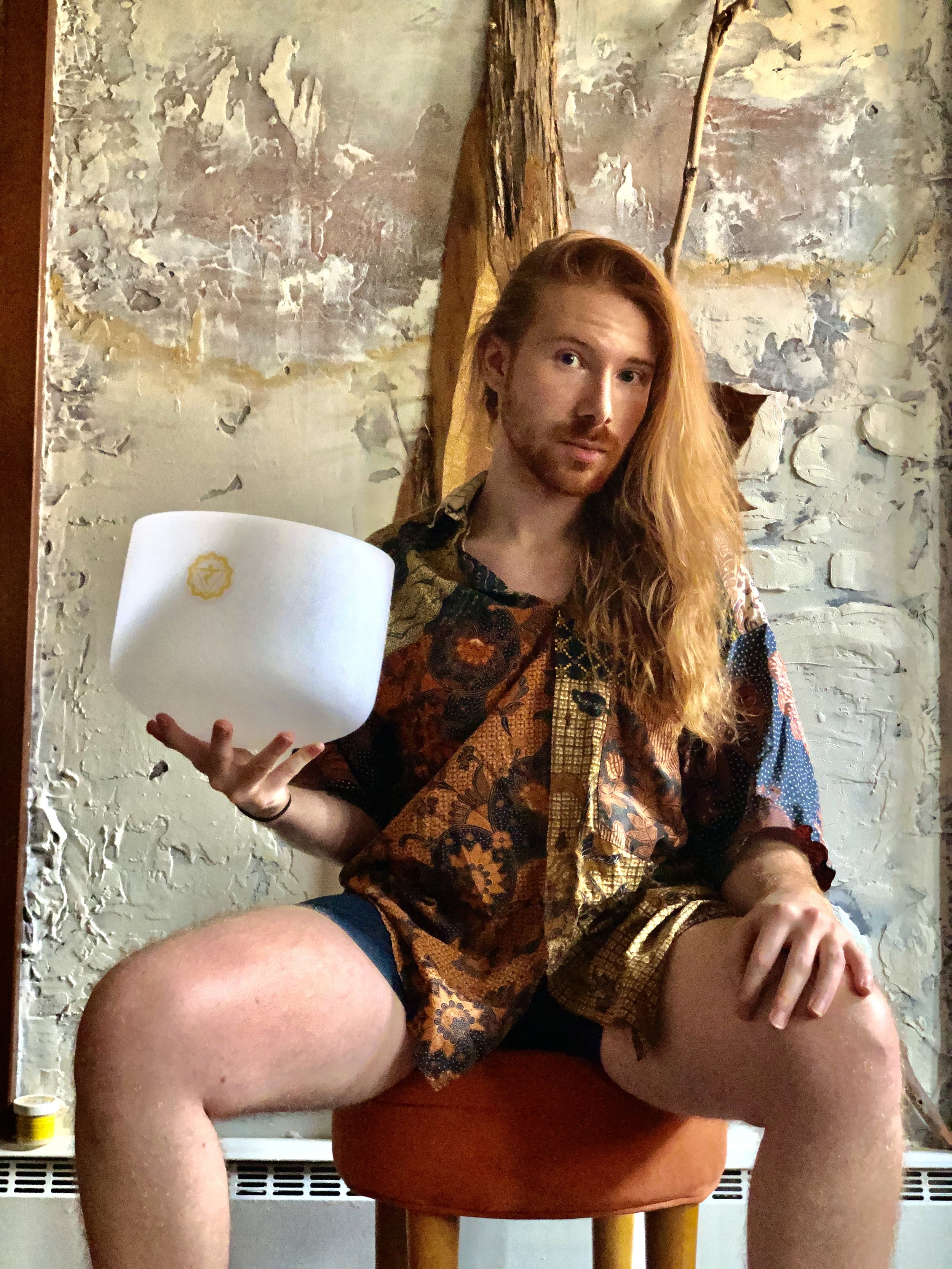
Sessions with Zaria
All offerings are grounded, integrative, and oriented toward care… but they support different entry points.
.
There are seasons in life when we benefit from walking with someone who can help us listen more deeply.
At the Temple of Golden Ether, I currently offer a few forms of one-on-one support.
One begins with the questions of the heart and spirit.
The other begins with the wisdom of the body.
Lastly, we open space for sacred reflection and listening.
Both are rooted in contemplative practice, deep listening, and the understanding that healing unfolds through relationship—with ourselves, one another, and the living world.
Intuitive Dharmic Counseling & Threshold Guidance
Contemplative Guidance for Life's Crossroads
Some seasons of life cannot be solved.
They must be listened to.
A relationship changes.
A vocation begins to call.
A spiritual awakening unfolds.
Grief reshapes the landscape.
An old identity no longer fits.
A quiet knowing asks to be trusted.
Threshold Guidance Sessions offer a contemplative space to pause, reflect, and orient yourself within these moments.
Together we explore what may be emerging through conversation, contemplative inquiry, symbolism, intuition, dharmic reflection, and—when appropriate—Jyotiṣa-informed orientation.
These sessions are not about prediction.
They are about participation.
Not about being told what your life means.
But about creating the conditions in which deeper clarity can emerge.
Sessions may include
Contemplative dialogue
Dharmic reflection
Symbolic and archetypal inquiry
Dream exploration
Spiritual discernment
Jyotiṣa-informed orientation
Mahāvidyā contemplative frameworks
Akāśic and intuitive inquiry
Embodied listening and nervous system awareness
For those interested in Jyotiṣa, I also offer introductory chart orientation as part of these sessions. While I continue my formal studies and am not yet offering comprehensive birth chart consultations, we may begin exploring the symbolic landscape of your chart together when appropriate.
Format
90 minutes
Available virtually.
Individual Yoga Therapy
Returning to the Wisdom of the Body
Sometimes the deepest guidance does not begin with insight.
It begins with the nervous system.
Yoga Therapy offers individualized support for people seeking greater regulation, restoration, resilience, and participation in daily life.
These sessions are rooted in the understanding that the body is not separate from healing, meaning, or spiritual practice.
It is often our first teacher.
Together we explore practices that support your unique constitution, circumstances, and rhythms.
Sessions may draw from therapeutic movement, breath practices, Yoga Nidrā, meditation, lifestyle rhythm, nervous system education, restorative practices, and contemplative embodiment.
The intention is not to perfect the body.
It is to cultivate a way of living that your body can honestly inhabit.
Sessions may support
Stress and burnout
Nervous system regulation
Fatigue and restoration
Life transitions
Embodied spiritual practice
Sustainable daily rhythms
Gentle movement and breath practices
Restorative Yoga and Yoga Nidrā
Individualized home practices
Every session is shaped collaboratively according to your goals, needs, and lived experience.
Format
75–90 minutes
Available virtually.
A Shared Philosophy
Although these are two distinct offerings, they arise from the same contemplative foundation.
Threshold Guidance begins with meaning.
Yoga Therapy begins with the body.
Over time, both invite us toward the same question:
How might we live in greater harmony with ourselves, one another, and the living world?
Whether we begin through conversation or through embodiment, the intention remains the same:
To cultivate deeper presence.
To remember our place within the larger field of life.
To practice a way of being that is grounded, relational, compassionate, and alive.
Oracular Sessions
Oracular Sessions are intuitive, symbolic, and reflective sessions for people seeking insight, clarity, and spiritual perspective.
These sessions may include:
Akashic field listening
Reflective inquiry
Oracle or tarot cards
Jyotiṣa-informed symbolism
Mantra and contemplative attunement
Intuitive reflection
Questions for integration
Gentle guidance for next steps
This is not a traditional Akashic Records reading.
It is also not psychotherapy, counseling, or yoga therapy.
An Oracular Session is a sacred reflective space where we listen together for what is emerging, what is asking to be seen, and what may support your next layer of clarity.
The purpose is not prediction.
The purpose is remembrance.
The purpose is not certainty.
The purpose is relationship with the field.
You may come to an Oracular Session with a question, a transition, a dream, a feeling, a creative block, a spiritual inquiry, or simply a desire to be witnessed through a symbolic and intuitive lens.
You remain the authority of your own life.
The oracle offers a mirror.
The field offers resonance.
Together, we listen.
Format
45 minutes
Available virtually.
Jyotiṣa Consultations (future offering)
Vedic Astrology for Reflection, Timing, and Dharma
Jyotiṣa, often translated as "the science of light," is a traditional system of astrology originating in India.
Rather than predicting a fixed future, Jyotiṣa can help illuminate patterns, developmental themes, strengths, challenges, and cycles of growth within a person's life.
Consultations may explore:
Natal chart interpretation
Life purpose and dharma
Career and vocation themes
Relationship dynamics
Current transits
Major life cycles and timing
Spiritual development
Seasonal and yearly reflections
Sessions are offered from a contemplative and developmental perspective, emphasizing self-awareness and wise participation rather than prediction or certainty.
Format: 90 minutes
Available: Virtual
Temple of Golden Ether
Group Experiences
-
Mantra & Yoga Nidrā
Sidereal Attunement and Deep Rest
A contemplative experience combining mantra, sound, meditation, and Yoga Nidrā.
Each gathering is informed by the current sidereal sky, seasonal rhythms, and the energetic qualities of the present moment. Participants are guided through practices that support restoration, insight, and reconnection with inner stillness.
Sessions may include:
Opening mantra practice
Breath awareness
Sound and resonance
Sidereal reflections
Guided Yoga Nidrā
Silent integration
What You May Experience
Deep rest
Nervous system regulation
Increased self-awareness
Greater connection to seasonal and cosmic rhythms
A sense of inner spaciousness and renewal
Ideal for: Anyone seeking rest, reflection, and contemplative practice.
-
A Space for Listening, Reflection, and Realignment
Life moves quickly.
The Recalibration & Integration Chamber offers a structured pause—a space to listen inwardly and reconnect with what matters most.
These gatherings blend contemplative practices, gentle movement, breathwork, reflection, and guided inquiry.
Participants are invited to slow down, notice what is arising, and engage life with greater clarity and intention.
Sessions may include:
Mantra
Prāṇāyāma
Intuitive movement
Contemplative listening
Dharāṇā (focused attention practices)
Reflective journaling
Group inquiry
What You May Experience
Increased clarity
Emotional integration
Nervous system regulation
Meaning-making
Greater alignment with personal values and purpose
Ideal for: Individuals navigating transitions, growth, uncertainty, or periods of personal transformation.
-
Restore & Renew
Movement, Breath, Sound, and Restorative Practice
Designed as a deeply nourishing and restorative experience, Restore & Renew blends yoga therapy principles, gentle movement, breathwork, sound, touch-based support (where appropriate), and deep relaxation.
This offering is particularly supportive for those experiencing stress, fatigue, overwhelm, burnout, or the cumulative demands of modern life.
A Typical Experience
Opening Mantra & Sound
We begin by arriving together through mantra, sound, and intentional presence.
Joint-Freeing Series & Sūrya Namaskāra
Gentle mobilization practices help awaken circulation, release tension, and prepare the body for practice.
Intuitive Movement
Participants are invited into exploratory movement that encourages self-awareness, embodiment, and responsiveness.
Restorative Support
Restorative postures may be paired with grounding techniques, therapeutic touch (when appropriate), massage elements, or supportive prop work to encourage deep regulation.
Śavāsana
Extended rest allows the body and nervous system to integrate the practice.
Dharāṇā
The experience concludes with a focused contemplative practice that supports steadiness, presence, and renewal.
What You May Experience
Deep relaxation
Reduced stress and tension
Improved nervous system regulation
Greater embodiment
Renewed energy and vitality
Enhanced capacity for rest
Ideal for: Caregivers, helping professionals, highly sensitive individuals, and anyone seeking restoration and renewal.

Book an Appointment
Frequently Asked Questions
Do I need prior experience with yoga or meditation?
Not at all. All experience levels are welcome.
Are these offerings religious?
The Temple draws inspiration from Yoga, Dharma traditions, Jyotiṣa, and contemplative wisdom streams. Participation does not require adherence to any particular religious belief.
What is Oracular Dharma?
Oracular Dharma is the practice of listening deeply to the symbolic, intuitive, contemplative, and relational dimensions of life. It is not fortune telling or prediction.
What is a Threshold Guidance Session?
A one-on-one contemplative session designed to support discernment, life transitions, spiritual inquiry, and personal growth.
Do you predict the future?
No.
The purpose of these offerings is not prediction but reflection, discernment, and conscious participation in life.
Are these services therapy?
No.
While Yoga Therapy is informed by therapeutic principles, Temple offerings are not psychotherapy, counseling, crisis services, or medical treatment.